Introduction
Artificial Intelligence is on the cusp of revolutionizing various aspects of our daily lives and industries. Recent trends indicate that AI is rapidly approaching human-level performance, with breakthroughs in intuitive applications across sectors making AI more accessible and efficient. From cutting-edge models rivaling industry giants to AI-augmented home living solutions, the future is brimming with possibilities. This article delves into these significant trends and breakthroughs, examining how they are poised to impact researchers, investors, and tech aficionados.
Chapter One will discuss the fantastic strides AI has made towards human-level performance, consolidating insights from Wired, AI Trends, and TechCrunch. The second chapter will focus on how AI is seamlessly integrating into daily life through innovative applications, impacting our interaction with technology.
Tables of Contents
Chapter 1: Human-level Performance Advances in AI: Must Read from Wired, AI Trends, and TechCrunch
- AI Surpassing Human Ingenuity in Solving Mathematical Conundrums
Chapter 2: Human-level Performance Advances in AI: Must Read from Wired, AI Trends, and TechCrunch
- Industry Transformation through AI: Pioneering Human-Like Capabilities by 2025
Chapter 1: Human-level Performance Advances in AI: Must Read from Wired, AI Trends, and TechCrunch
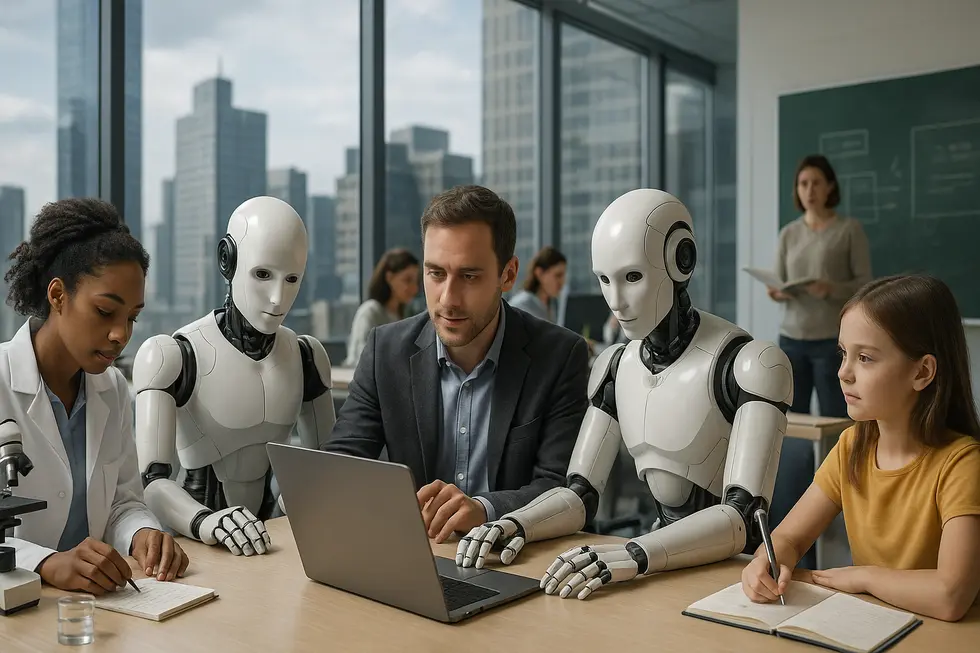
1. AI Surpassing Human Ingenuity in Solving Mathematical Conundrums
In the quest for human-level performance in AI, Google’s DeepMind team has broken new ground with AlphaEvolve, a formidable AI system that has overshadowed human performance in mathematical problem-solving. By integrating large language models with evolutionary algorithms, AlphaEvolve stands as a testament to AI’s expanding capabilities in domains traditionally dominated by human cognition. A notable achievement of this system is its revolutionary approach to matrix multiplication, where it has reduced the process to 48 scalar multiplications for two 4×4 matrices—a feat that surpasses a long-standing 56-year-old record.
The scope of AlphaEvolve extends beyond matrix multiplication, venturing into a multitude of challenging problems across mathematical analysis, geometry, and combinatorics. In a robust series of tests designed to evaluate its competence, AlphaEvolve not only matched the existing state-of-the-art solutions approximately 75% of the time but also improved upon them in about 20% of the cases. This demonstrates an impressive wild card capability in algorithm design, where it autonomously generates novel solutions—a skill that differentiates it from common coding aids.
As we look towards the future, the implications of AlphaEvolve’s accomplishments suggest a profound shift in mathematical research and problem-solving paradigms. By efficiently navigating vast spaces of possible solutions, AI promises to unlock mysteries that have perplexed human minds for decades. The synergy between human intellect and machine precision could catalyze breakthroughs across scientific disciplines, reshaping our understanding of complex systems. With continued advancements in AI, it is plausible that we will witness an era marked by unprecedented mathematical discoveries and innovations, facilitated by human-AI collaboration. Read more about AI’s trajectory in advancing research and industry ethics.
In tandem with its problem-solving prowess, AlphaEvolve’s contributions extend to applied mathematics and everyday computing needs. Google’s deployment of this AI in their operations has yielded tangible improvements, enhancing efficiency by 1% in their data centers and optimizing their Gemini model training by a similar margin. Such practical applications exemplify how AI’s capacity to exceed human-level performance is not confined to theoretical realms but is actively influencing and improving real-world technology and infrastructure. As the field continues to advance, AlphaEvolve stands as a beacon of what is possible when AI’s computational creativity informs both academic and practical pursuits.
For those eager to delve deeper into the world of AI-driven algorithm discovery, further insights can be gleaned from The Outpost AI’s feature on Google DeepMind’s AlphaEvolve.
Chapter 2: Human-level Performance Advances in AI: Must Read from Wired, AI Trends, and TechCrunch

1. Industry Transformation through AI: Pioneering Human-Like Capabilities by 2025
Artificial intelligence (AI) is rapidly approaching a pivotal moment in its evolution, one where the distinction between human-like performance and what we are accustomed to expecting from machines begins to blur. By 2025, AI is set to revolutionize various industries, driven by the remarkable achievements in generative AI which echo human-like capabilities. Systems such as ChatGPT and DALL-E have established themselves as transformative tools, playing crucial roles in content creation and problem-solving across diverse sectors.
Companies are increasingly embedding AI into their operational strategies, with approximately 83% of firms placing AI at the forefront of their strategic agendas. This surge in AI adoption is reshaping everything from customer service to supply chain management, granting businesses a competitive edge that previously seemed out of reach. Such integration not only boosts efficiency but also innovates traditional processes, creating a paradigm shift in how industries operate.
The transformation does not stop at organizational processes. The workforce itself is undergoing a seismic shift due to AI’s rise. By the conclusion of 2025, it is anticipated that approximately 97 million people will be employed in the AI sector. This includes emerging roles like AI engineers and ethical AI specialists, underlining the extensive reach and influence of AI development. Business leaders acknowledge AI as integral to their success, with nearly 90% emphasizing its significance in achieving future goals.
Investment in AI mirrors its growing importance, with about 92% of executives planning to ramp up their AI budgets over the next three years. Valued at an estimated $74 billion in the US alone by 2025, the AI market is expected to witness a compound annual growth rate (CAGR) of 26.95% extending to 2031. These numbers highlight AI’s potential as a powerhouse for driving economic growth and innovational prowess on a global scale.
A pivotal element of AI evolution is achieving human-level performance. This near-reality encompasses tasks performed by generative AI systems, where creations can be indistinguishable from those made by humans. Remarkable platforms such as ChatGPT exemplify these capabilities through text generation, paralleled by DALL-E’s prowess in image creation. Industries thus benefit from automation in complex tasks, consequently enhancing productivity and driving innovation.
As AI progresses, its impact permeates virtually every aspect of contemporary life and business. Staying informed on these advances is crucial for any entity aiming to harness AI’s full potential. To explore more about how these technologies will shape the world, visit this detailed analysis on AI trends and breakthroughs.
Final thoughts
AI’s evolution towards human-level performance and its seamless integration into daily life heralds a new era of technological advancement. By leveraging these innovations, industries and individuals alike stand to gain unprecedented efficiencies and conveniences. For researchers and investors, staying informed about these trends is vital to harnessing AI’s full potential. Ultimately, the horizon is rich with opportunities for innovation and investment in AI, promising a future that is not only more efficient but also more interconnected and user-friendly.
Don’t miss the must-read AI stories—follow BitKnow.ai!
About us
BitKnow is a Southeast Asia-based Web3 media platform powered by AI-driven content creation and curation. Focused on delivering real-time crypto insights, project exposure, and educational storytelling, BitKnow combines automation with human editorial oversight to ensure fast, accurate, and engaging Web3 coverage.