Introduction
Artificial Intelligence continues to revolutionize various sectors, offering groundbreaking advancements and new possibilities. With recent developments from industry leaders like OpenAI, DeepMind, and insights from the MIT Technology Review, AI is reshaping the landscape in fields such as medical diagnosis, energy infrastructure, and market research. This article delves into these significant advancements, presenting a comprehensive overview of how AI is pushing the boundaries of innovation and understanding in each domain.
Tables of Contents
Chapter 1: AI Daily Innovations in Medical Applications: Breakthroughs from OpenAI and DeepMind
- Revolutionizing Patient Care: AI’s Cutting-Edge Advances in Diagnostics and Treatment
Chapter 2: AI Daily Innovations in Medical Applications: Breakthroughs from OpenAI and DeepMind
- Tailoring Treatment: AI’s Personalized Healthcare Revolution
Chapter 1: AI Daily Innovations in Medical Applications: Breakthroughs from OpenAI and DeepMind
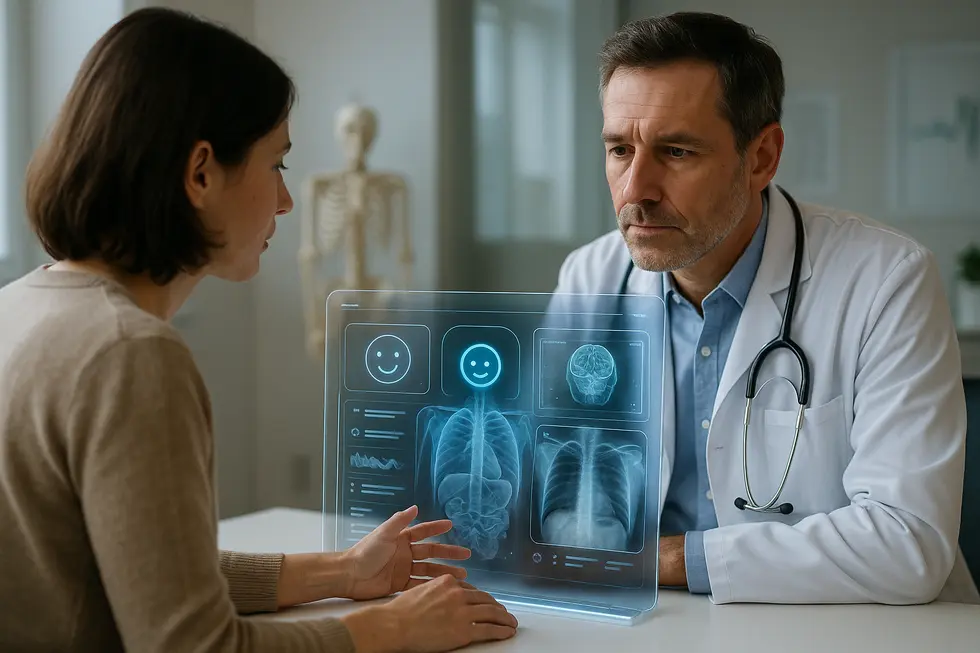
1. Revolutionizing Patient Care: AI’s Cutting-Edge Advances in Diagnostics and Treatment
The year 2025 has marked an unprecedented evolution in the realm of AI diagnostics and treatments, fundamentally transforming patient care. The landscape of medical diagnosis has been dramatically reshaped by AI’s ability to deliver remarkable accuracy, speed, and personalization. These sophisticated diagnostic tools harness machine learning and deep learning algorithms to navigate through extensive datasets with exceptional precision, offering healthcare professionals invaluable insights. This innovation is crucial amidst increasing demand on healthcare facilities and personnel shortages, thereby significantly enhancing operational efficiency and diagnostic accuracy.
AI diagnostics have particularly revolutionized laboratory environments by streamlining processes and reducing manual tasks. Lab operations are more connected than ever, thanks to AI’s integration with laboratory information management systems, leading to real-time tracking of samples and faster result dissemination. Companies like Scispot have spearheaded this transformation with their intuitive interfaces, altering how laboratories interact with data and redefining the workflow in diagnostic laboratories. Read more about AI diagnostics in 2025.
On the treatment frontier, AI’s impact is equally profound. Google’s Articulate Medical Intelligence Explorer (AMIE) has emerged as a powerful tool, excelling even beyond human capabilities in diagnostics. It exemplifies the revolution in healthcare AI, offering a paradigm shift rather than mere evolutionary progress. This system’s proficiency in interpreting multimodal data and analyzing medical imagery signifies a monumental leap in AI’s potential to improve healthcare outcomes. Simultaneously, Profluent Bio’s ProGen3 model series underscores the synergistic relationship between AI and protein design. By adopting scaling principles akin to language models, ProGen3 has paved a new path for predictive protein design, which is pivotal for drug development.
DeepMind’s contributions to this field further underline the transformative power of AI in healthcare. Through collaborations like the one with Google Research on AMIE, DeepMind has demonstrated AI’s potential to not only match but exceed human diagnostic performance. While OpenAI’s current impact remains less pronounced in diagnostics, the foundational principles shared between AI domains hint at promising possibilities in the near future. The innovations spearheaded by AI leaders are pushing the boundaries of what is possible in diagnostics and treatment, promising a new era in healthcare marked by greater precision and efficiency.
Chapter 2: AI Daily Innovations in Medical Applications: Breakthroughs from OpenAI and DeepMind

1. Tailoring Treatment: AI’s Personalized Healthcare Revolution
Artificial intelligence is reshaping personalized healthcare, marking an epochal shift in how we approach patient care. By leveraging vast datasets, AI enhances diagnostic precision and predictive modeling, enabling healthcare professionals to tailor treatments to individual needs. This technological evolution reduces adverse reactions and augments healthcare outcomes, crafting a more bespoke patient journey.
One shining example of innovation comes from ASUS, with its HealthAI Genie. This tool functions as a personal health coach, adeptly interpreting physiological data to deliver bespoke health insights. Such tools exemplify how AI is empowering individuals to take charge of their health, facilitating informed decisions aided by real-time analytics.
Innovations in AI-powered medical applications have significantly advanced adaptive treatments, pushing personal healthcare boundaries. Devices like AI-integrated insulin pumps dynamically adjust therapy in response to ongoing patient data collection, exemplifying the intricate dance between continuous monitoring and personalized care. These breakthroughs also extend into clinical decision-making, where AI plays a pivotal role by recommending treatment plans informed by the latest research trends and outcome data, tailoring strategies to the granular level of an individual’s health profile.
While DeepMind and OpenAI may not feature prominently in these immediate medical breakthroughs, their foundational contributions to AI research have provided the bedrock upon which these applications are built. Their pioneering work in multi-modal reasoning and language models has spurred similar approaches in personalized medical AI, illuminating potential pathways for future developments.
The future of AI in healthcare is bound to the integration of Internet of Things (IoT) and big data, creating an ecosystem where personalized care thrives. Innovation exemplified by ASUS’s Clinical AI Assistant and HealthAI Genie is setting new benchmarks in health management. The Philips Future Health Index 2025 underlines this trajectory by urging healthcare leaders to act decisively, embracing AI’s transformative potential to overhaul traditional paradigms of care.
For insightful exploration of AI’s burgeoning role in personalized medicine and potential impacts on future paradigms, visit the Philips Future Health Index 2025.
Final thoughts
AI continues to make waves across various industries, offering promising possibilities and challenging current infrastructure paradigms. As OpenAI and DeepMind push the boundaries in medical diagnostics and energy optimization, it’s evident that these technologies provide both solutions and challenges. Through MIT Technology Review’s insights, we grasp the profound impact AI will have in understanding market dynamics and maintaining ethical standards. These daily innovations underscore the importance of staying informed and adaptive in a rapidly evolving AI-driven world.
Stay ahead in AI—subscribe to BitKnow.ai for real-time AI innovations!
About us
BitKnow is a Southeast Asia-based Web3 media platform powered by AI-driven content creation and curation. Focused on delivering real-time crypto insights, project exposure, and educational storytelling, BitKnow combines automation with human editorial oversight to ensure fast, accurate, and engaging Web3 coverage.